Premium Link-Building Services
Explore premium link-building options to boost your online visibility.
Explore premium link-building options to boost your online visibility.
By the My Marketing World Editorial Team
Google completed its mobile-first indexing rollout in July 2024. Site owners treated it as a future concern for years. Now it is the only reality: Google crawls, renders, and indexes your mobile version as the canonical source. Yet in 2026, we still see the same structural problems during audits — content parity gaps between desktop and mobile, improperly configured viewports, and aggressive interstitials that trigger ranking demotions. These issues rarely produce dramatic traffic drops. They create slow, invisible erosion that analytics dashboards blame on “algorithm updates.”
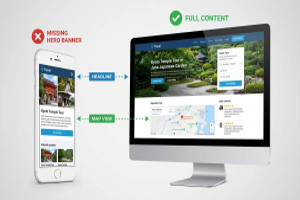
The direct answer: mobile-first indexing in 2026 fails most often because the mobile version of a website contains less content, fewer internal links, and weaker structured data than its desktop counterpart. Google sees a thinner page and ranks it accordingly. Technical misconfigurations — blocked CSS or JavaScript, viewport errors, touch elements placed too closely — compound the problem.
The most persistent issue is deceptively simple. Teams design desktop pages with full content blocks, sidebar modules, and related product carousels. Then they build the mobile version by hiding elements to save space. Accordions collapse descriptions. Author bios disappear. Related modules vanish. From Google’s perspective, the mobile page is substantively weaker than the desktop original.
Research from Cal Poly’s SEO fundamentals coursework confirms that search engines evaluate mobile pages using the same content quality signals as desktop versions. When content blocks are removed through display:none or lazy-loaded behind interactions Googlebot never triggers, the indexed page carries less semantic weight. The fix is not to show everything at once on mobile. It is to keep the same content in the DOM and reorganize: stack instead of side-by-side, collapse less aggressively, and ensure hidden content remains crawlable.
Google’s intrusive interstitial penalty, announced in 2017, remains active in 2026. Pop-ups covering main content, standalone interstitials requiring dismissal, and layouts pushing content below an interstitial banner all trigger demotions. The University of New Hampshire’s digital marketing guidelines note that promotional overlays before content loads create friction correlating with higher bounce rates.
Internal documentation from Google’s search systems, referenced during the 2024 DOJ antitrust proceedings, revealed that the Navboost system tracks mobile-specific signals including goodClicks, badClicks, and lastLongestClick. When a mobile user hits an interstitial and immediately returns to search results — pogo-sticking — it generates a negative signal. The interstitial itself triggers a violatesMobileInterstitialPolicy flag. Combined, these explain why sites with strong content underperform in mobile search.
Viewport meta tag errors remain surprisingly common on European e-commerce sites. A missing or incorrectly set viewport prevents proper page scaling, causing horizontal scrolling and text too small to read without pinching. Google Search Console flags these in the Mobile Usability report, but many teams ignore the warnings because the page “looks fine on my phone.”
Touch element spacing hurts both SEO and conversion. Buttons and links placed too closely create tap target overlaps. Google’s mobile-friendly criteria require touch targets large enough and spaced sufficiently to prevent accidental taps. Poorly spaced elements increase frustration on checkout flows and lead forms where every fractional conversion loss carries revenue impact.
Structured data markup often breaks between desktop and mobile because the code injecting the schema — frequently a sidebar widget or footer module — renders only on desktop. If your BreadcrumbList or Product schema disappears on mobile, rich results eligibility disappears with it. The same pattern affects internal linking: sidebar navigation, related-post modules, and footer links commonly truncate on mobile, reducing crawlable link equity.
A technical SEO mastery audit treats these as interconnected signals rather than isolated bugs. Fixing schema without restoring internal links leaves the crawl problem unaddressed. For teams running e-commerce SEO strategies, Product schema on mobile directly influences whether rich results appear for the queries driving most traffic.
Run this checklist quarterly to catch mobile-first indexing gaps:
Content Parity (6 points) - [ ] Compare 5 representative pages side-by-side on desktop and mobile - [ ] Verify all heading tags (H1-H3) present on mobile match desktop - [ ] Confirm body text, product descriptions, and FAQ content are identical - [ ] Check that content in accordions or tabs is rendered in the mobile DOM - [ ] Ensure alt text on mobile images matches desktop equivalents - [ ] Verify video embeds and transcripts are present on both versions
Structured Data & Metadata (4 points) - [ ] Run Rich Results Test on mobile URLs and confirm all schema parses - [ ] Verify BreadcrumbList schema renders correctly on mobile - [ ] Confirm Product/Article/FAQ schema is present on mobile pages - [ ] Check that canonical tags and hreflang annotations match across versions
Internal Linking (3 points) - [ ] Count internal links on mobile vs. desktop; document any gap over 20% - [ ] Verify main navigation menu links are crawlable (not JavaScript-only) - [ ] Confirm footer links and breadcrumb navigation are present on mobile
Technical Configuration (5 points) - [ ] Validate viewport meta tag is present and correctly configured - [ ] Confirm no critical CSS or JS files are blocked in robots.txt - [ ] Verify mobile pages return HTTP 200 (not soft 404s or redirects) - [ ] Check that lazy-loaded images use native loading="lazy" not JS-only triggers - [ ] Confirm font sizes render readable without pinch-zooming
Interstitials & Usability (4 points) - [ ] Verify no full-screen pop-ups appear on mobile landing pages from search - [ ] Confirm cookie banners occupy under 25% of viewport and are dismissible - [ ] Check tap targets are minimum 48px and spaced without overlap - [ ] Verify no horizontal scrolling occurs at default zoom level
Performance (3 points) - [ ] Test mobile LCP under 2.5 seconds on PageSpeed Insights - [ ] Confirm mobile INP under 200ms for interactive elements - [ ] Verify mobile CLS under 0.1 with no layout shifts from ads or images
Mobile-first indexing fixes assume your site already produces content that satisfies search intent. No technical optimization will rank thin or duplicate content. JavaScript-heavy single-page applications may require additional rendering diagnostics beyond this checklist, particularly if content loads dynamically based on user interactions Googlebot does not simulate. Sites using heavy personalization face added complexity because the “mobile version” may vary by visitor, making parity auditing harder. This checklist measures whether you meet Core Web Vitals thresholds, not how to improve them.
How often should we run a mobile-first indexing audit? Quarterly is the practical minimum. More frequently if you deploy redesigns or launch new page templates that change structure.
Does Google penalize content hidden behind “read more” buttons on mobile? Content in accordions is indexed but may carry reduced weight. Keep critical content — product descriptions, FAQs, body copy — visible by default. Reserve collapsible sections for supplementary material.
Can we use different layouts on desktop and mobile if the content is identical? Yes. Google does not require identical visual layout. It requires equivalent content, structured data, and internal linking. Using CSS to restack or reorder elements is standard practice and does not trigger issues.
What is the fastest way to check what Googlebot sees on our mobile pages? Use Google Search Console’s URL Inspection tool. Test the live URL, view the screenshot, and compare it to what you see on a real mobile device. Discrepancies indicate rendering or parity problems.
Do interstitials for legal compliance — cookie consent, age verification — hurt rankings? No. Google’s policy exempts interstitials required for legal obligations, login dialogs for non-public content, and reasonably sized dismissible banners. The penalty targets promotional pop-ups that obstruct content access.
Explore premium link-building options to boost your online visibility.